

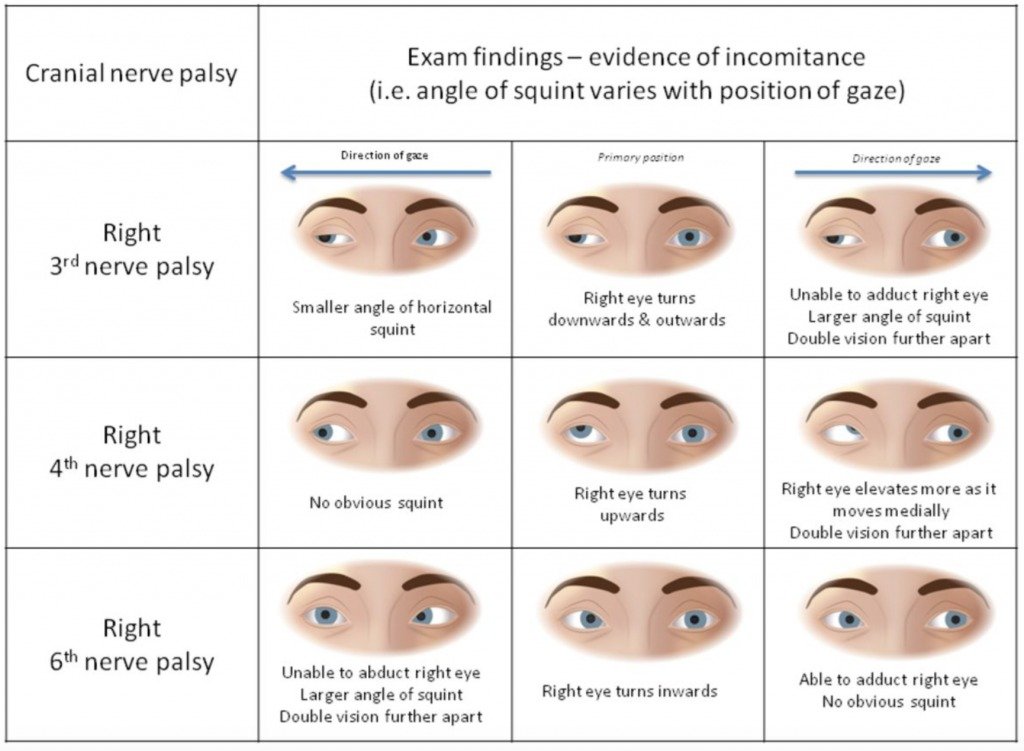
Ocular palsies refer to weakness or paralysis of the nerves that control eye movements. These conditions affect the extraocular muscles and result in symptoms such as double vision (diplopia), drooping of the eyelid (ptosis), misalignment of the eyes (strabismus), and difficulty in moving the eye in certain directions. The most common ocular palsies involve the third, fourth, and sixth cranial nerves.
Third nerve palsy (Oculomotor nerve palsy) affects multiple eye muscles and may also involve the pupil. Patients often present with a “down and out” eye position, ptosis, and sometimes a dilated pupil. Causes include diabetes, hypertension, trauma, aneurysm, and tumors. Pupil-involving third nerve palsy can be a neurological emergency and requires urgent evaluation.
Fourth nerve palsy (Trochlear nerve palsy) affects the superior oblique muscle. It commonly presents with vertical double vision, which worsens when looking down or reading. Patients may tilt their head to compensate for the diplopia. It can be congenital or acquired due to trauma, microvascular disease, or intracranial pathology.
Sixth nerve palsy (Abducens nerve palsy) affects the lateral rectus muscle, leading to an inability to move the eye outward. Patients typically complain of horizontal double vision, worse when looking toward the affected side. Diabetes, raised intracranial pressure, infections, and head injury are common causes.
Less commonly, combined ocular palsies may occur in conditions like cavernous sinus syndrome or orbital apex syndrome, where multiple cranial nerves are involved simultaneously.
Diagnosis involves detailed ocular examination, assessment of eye movements, pupil reactions, and sometimes neuroimaging such as MRI or CT scan. Management depends on the underlying cause. Some microvascular palsies recover spontaneously over weeks to months, while others may require medical treatment, surgery, or prism glasses to relieve diplopia.
Early diagnosis and timely referral are essential, as certain ocular palsies may indicate serious underlying systemic or neurological conditions.